If you’re buying citrine for yourself or as a gift, the colour and the story behind it can both help you choose. Citrine is a yellow to orange quartz, and the traditional citrine meaning centres on abundance, warmth and confidence. Natural citrine is usually paler, while much of the citrine sold worldwide is amethyst that has been heated to change its colour.
Citrine meaning in crystal tradition
Citrine is traditionally linked with abundance and is often called the merchant’s stone. If that association speaks to you, a piece on your desk or near your till can serve as a personal reminder of what you’re working toward.
Warmth and confidence are also part of citrine’s traditional meaning. A bracelet can make a thoughtful gift for someone starting a new job or opening a shop, especially if you include a note about why you chose the stone for them.
You might also choose citrine simply because you like its colour. A pale piece can suit a collection where you want a softer yellow, while a deeper orange might be the colour you’d most enjoy seeing on your shelf. If you’re comparing stones by what they traditionally symbolize, you’ll find more in our crystal meanings guide.
How to spot natural citrine
When shoppers ask how to spot real citrine, they often want to know whether the colour is natural or comes from heating amethyst. The colour of the crystal and the look of its base give you two places to start, especially when you’re comparing pieces online.
- Colour. Natural citrine tends to be paler. A deep orange colour is a common clue that the piece may be heated amethyst.
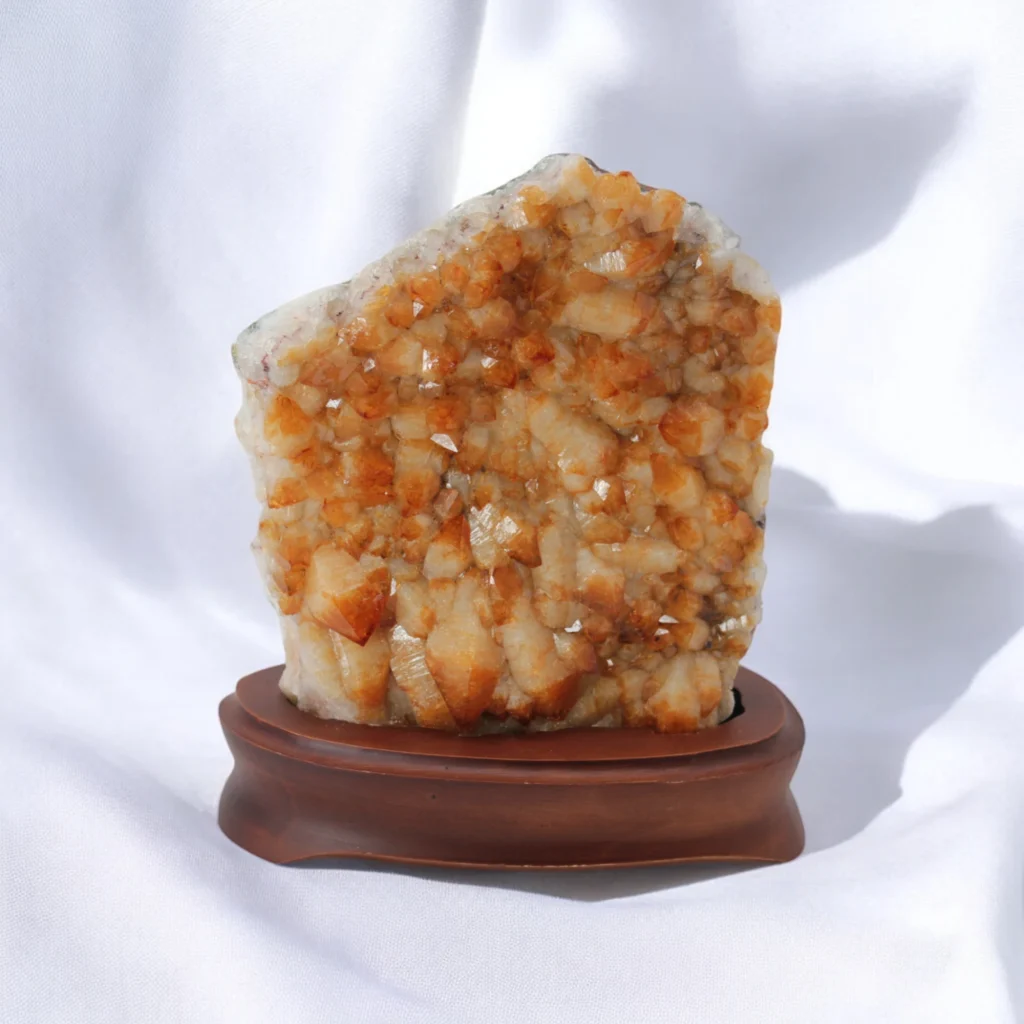
- Base. A white base beneath deep orange crystals is another clue you may be looking at heated amethyst. A photo showing the whole piece gives you more to compare than a close-up of the tips.
Colour gives you a clue, and the seller’s description can help you decide whether a piece meets your preference. If a listing leaves you wondering, you’re welcome to ask us about any piece before buying. It helps to share the product name or link so we know which one caught your eye.
If natural colour matters most to you, you can make that your first question. If it’s the deeper orange you like, you might spend more time comparing the shapes and deciding where the piece will go. Knowing which detail matters to you makes it easier to narrow down your choices.
Choosing citrine for your home or as a gift
It helps to decide how you’ll use the piece before comparing prices. A bracelet makes sense if you want to wear your citrine. For a display, the space you have and how prominently you want the stone to sit can help you choose between a chunk, tower, cluster or cathedral.
For a desk or shelf
- Chunk. If you want a piece to sit alongside other stones on a shelf, there’s Citrine 0.7kg for $50.
- Tower. If you like an upright shape for a desk or shelf, there’s Citrine Tower (M) – approx 200-300g 0.3kg for $50.
- Cluster with a stand. If you’d like a cluster you can display on its included stand, there’s Citrine Cluster with Wood Stand – 1.3kg for $150.
For a larger display
If you like the look of a cluster, two pieces to compare are Citrine 1.5kg for $150 and Citrine 2.0kg for $200. When both fit your budget, their photos can help you decide which shape and shade you’d like to see in your space.
For a display with room for a heavier piece, Citrine 8.3kg is a cathedral priced at $1200. It helps to decide where a piece of that weight will sit and how you’ll move it into place before you buy.
For wearing or giving
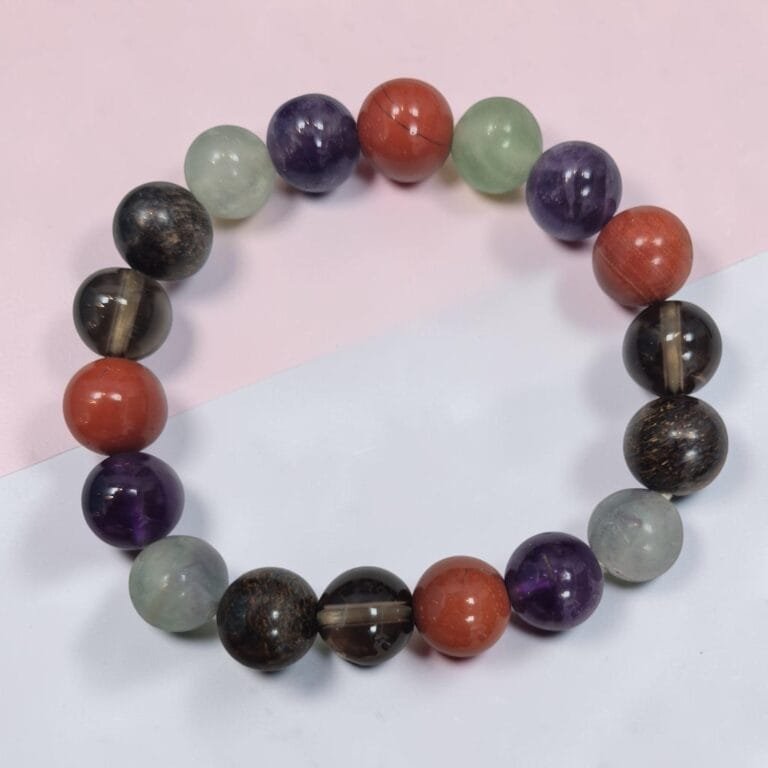
If you’re comparing bead sizes, Citrine Bracelet 8mm is $40 and Citrine Bracelet (10mm) is $45. If it’s a gift, a bracelet the recipient already wears can give you a sense of the bead size they prefer. You can also think about whether they usually wear one bracelet on its own or several together.
Caring for citrine
For light dust on a display piece, a soft, dry cloth is a simple starting point. If dust has settled between the points of a cluster or you’re unsure how to clean its base or stand, you can ask us about that piece before using water or a cleaner.
A level surface with room around it is a sensible choice for a larger display piece. If you have a busy desk, it helps to put a cluster or tower away from the edge and leave enough room to reach the things you use every day.
For a bracelet, a regular spot to put it when you take it off makes it easier to find the next time you want to wear it. A jewellery box or a dish on your dresser can do the job.
Questions
Is citrine a November birthstone?
Yes, citrine is a November birthstone. If you’re shopping for a November birthday, the recipient’s habits can help you choose between jewellery they can wear and a piece they can keep on display. A short note about the birthstone connection can explain why you picked it.
Do you ship citrine across Canada?
Yes, we ship across Canada for a flat rate of $12, with free shipping on orders over $125. Heavy items weighing 20 kg or more ship at the carrier’s rate. Free pickup is available at our Concord store.
What if I need to return a piece?
Returns are available within 7 days of receiving your order, provided the piece is unused and in its original packaging. If you’re buying a gift, it helps to keep the packaging and keep the return window in mind. You can read the details in our return policy.
Where can I visit Serenity Stones in person?
Our family-owned shop is at Unit 39, 3175 Rutherford Rd, Concord, ON L4K 5Y6, a few minutes from Vaughan Mills and Highway 400. We’re open from 10 AM to 8 PM and closed on Tuesdays.
You’re welcome to visit us in Concord or shop our citrine collection online.