If you’re wondering how to tell if a crystal is real, start with what you can see and what the seller can tell you. Look at the colour and any marks inside the piece, compare how it feels with a similar piece, and ask what it’s made of and whether dye or heat changed the colour. Each clue helps you decide what to ask next.
How to tell if a crystal is real when you can hold it
Compare temperature and weight
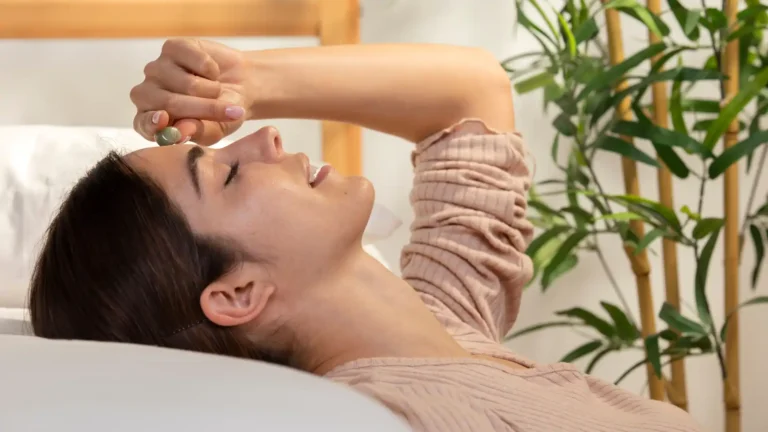
If a piece feels cool when you first pick it up, you can compare it with a similar piece that’s been sitting in the same room. Try to compare them before holding either one for long. A piece that someone just handled can feel different from one that’s been sitting on the counter.
Weight makes more sense when you compare pieces of a similar size and shape. With jewellery, the weight you feel includes any hardware as well as the stone. If one piece feels surprisingly light or heavy, you can ask the seller what accounts for the difference. Feel alone leaves the material uncertain.
Look inside the piece
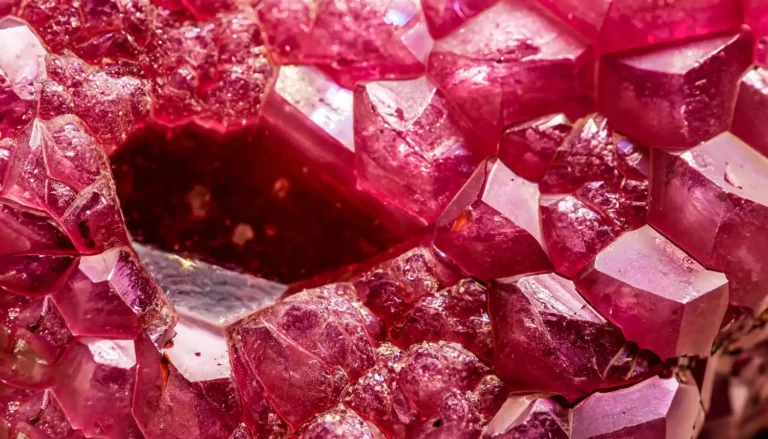
Inclusions are features you can see inside a stone. If you’re looking at a clear piece, you can turn it in the light and see whether small marks show up as the angle changes. Perfect clarity can prompt a closer look, and it’s worth checking the material listed for pieces with visible inclusions too.
Little round bubbles inside a transparent piece can be a clue that it’s glass. If you’re shopping online and a photo seems to show bubbles, a close-up from another angle can help you see whether those marks are inside the piece. You can also ask whether the shop knows what the piece is made of.
Look at where the colour sits
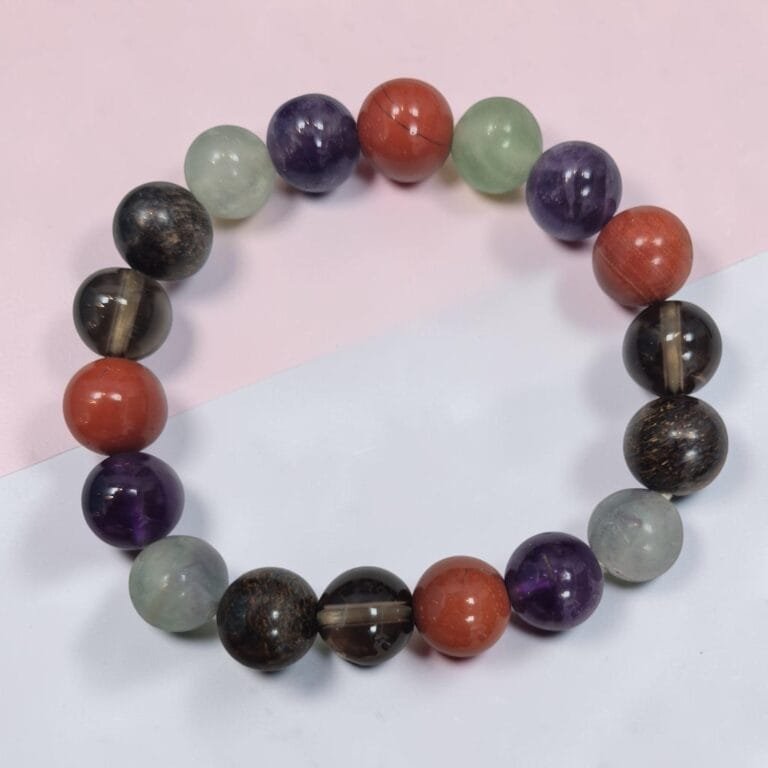
Very bright colour is a reason to take a closer look. On a bead, the area around the drill hole gives you a good place to check. If there’s a dark line in a crack or the colour looks stronger around the hole than on the rest of the bead, dye may be behind what you’re seeing.
Sometimes the listing photo shows the overall colour clearly, but it’s hard to see where the colour gathers. You can ask for a close-up of the area you’re curious about. If the colour is what drew you to the piece, it’s worth asking whether it was added or changed before you choose.
Ask what the trade name means
A trade name is the name a piece is sold under. If a listing gives you only that name, you can ask the shop to describe the material in plain words. These are some names and look-alikes you may come across while browsing.
- Opalite. This is man-made glass. If you’re after opal, you can ask the seller to confirm that the listing is for opal.
- Goldstone. This is also man-made glass. If you like the sparkle, you can choose it with a clear idea of what you’re buying.
- Howlite sold to look like turquoise. Howlite is often dyed to resemble turquoise. If a piece has that look, you can ask which stone it actually contains.
- Citrine. Much of the citrine on the market is amethyst that has been heated to change its colour. You can ask what the seller knows about how a specific piece got its colour.
- Malaysian jade. This name usually refers to dyed quartzite. If you’re shopping for jade, you can ask what material the trade name refers to in that listing.
Knowing how the colour or look came about helps you decide whether the piece suits what you want. If you’re choosing by colour, you might be happy with dyed howlite. If you’re after turquoise, ask the seller to confirm the material before you order.
Compare prices for similar pieces
If a price looks unusually low, you can compare it with pieces of a similar size and form sold as the same material. The comparison works best when the listings describe the material and say what the seller knows about any changes to the colour. A low price is a reason to ask for details. Price alone leaves the identity of the piece open.
For an example from our shop, a shopper looking for amethyst could see the Amethyst Chips Bracelet/Anklet at $25 and the Amethyst 7.3kg at $1000. One listing is for chip jewellery and the other is for a cathedral. Comparing the bracelet with another piece of amethyst chip jewellery would give that shopper a more useful starting point.
Find a piece you like and ask about it
These pieces give you a place to start browsing. If a name, colour or detail catches your eye, you’re welcome to ask us about that specific piece before ordering.
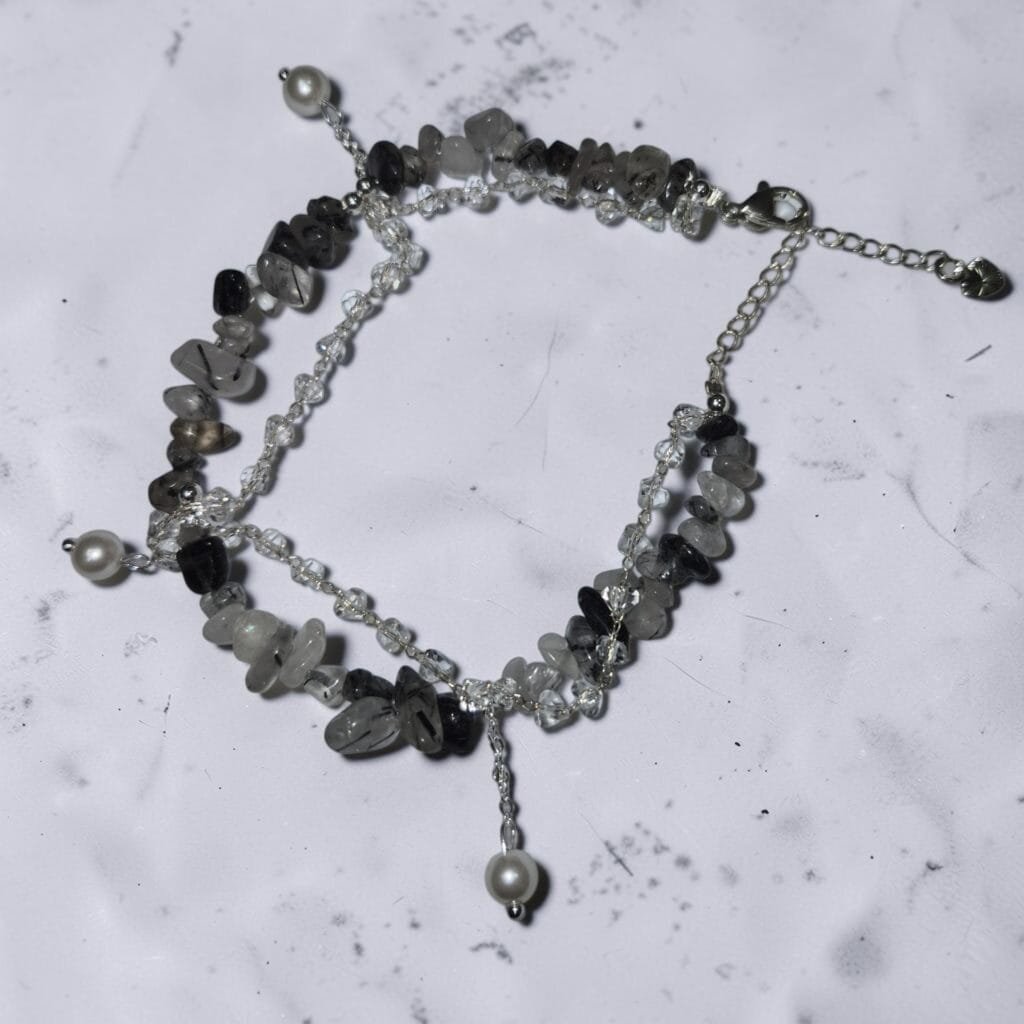
- For chip jewellery, you might like the Rutilated Quartz Chips Bracelet/Anklet at $25.
- For a faceted bracelet, there’s the Faceted Rainbow Tourmaline Bracelet 4mm at $20.
- For a chunk, there’s the Chrysocolla 0.6kg at $75.
- For a piece to hang, there’s the Clear Quartz Round Suncatcher at $50.
A clear answer from a shop tells you what the seller knows about the material and whether they know of any dye or heating. An honest answer can also be that the shop doesn’t know. If you’re still working out what you like, our beginner’s guide to buying crystals can help you get started.
Questions
Does a cool feel tell me whether a crystal is real?
A cool feel gives you one clue. It helps to compare pieces that have been in the same room, then consider what you see and what the seller says about the material.
Does a bright colour always mean a stone is dyed?
Brightness alone leaves the question open. A line of stronger colour in a crack or around a bead hole gives you a more specific detail to ask the seller about.
What can I ask if I’m buying a crystal online?
You can ask what the piece is made of, what the seller knows about dye or heat, and whether there’s a close-up of the area you’re unsure about. If the listing uses a trade name, you can also ask what material that name refers to.
Can I ask about a piece before I visit the store?
Yes, you’re welcome to ask our family about any specific piece before making the trip to Concord. Our store is open from 10 AM to 8 PM and closed Tuesdays. If you’re ordering online, we offer free pickup at the store and ship across Canada. You can also read our return policy before you order.
You’re welcome to browse our pieces under $50 online or visit us at Unit 39, 3175 Rutherford Rd, Concord, ON L4K 5Y6.